


High-Purity Titanium Sputtering Targets: Planar, Rotary & Disc
In modern industrial electrochemistry, the anode is often called the “heart” of the reaction. Whether in highly acidic electroplating baths or large-scale wastewater treatment systems, the choice of electrode material directly determines operational costs and output quality. As experts in electrochemical materials, our Dimensionally Stable Anodes (DSA) are designed to solve the common pain points of traditional graphite and lead anodes, such as short lifespan, high energy consumption, and electrolyte contamination.
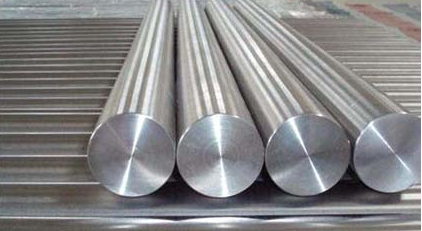
1. What Defines a High-Performance Titanium Target?
Titanium (Ti) is the “workhorse” of the PVD industry due to its exceptional adhesion and corrosion resistance. However, not all Ti targets are created equal.
Purity Levels: * 4N5 (99.995%) to 5N (99.999%): Essential for semiconductor wafers. Low alkali metal content ensures stable gate voltages and minimizes defect density.
3N5 (99.95%): Typically used for decorative coatings (cellphone frames, hardware) and hard coatings.
Microstructure Control: It’s not just about chemistry; it’s about physics. A controlled grain size (typically $< 100\mu m$) and random crystallographic orientation ensure a uniform sputter rate and prevent the “nodule” formation that ruins thin-film integrity.
2. Geometry Matters: Planar, Rotary, or Disc?
Choosing the right shape is a balance of equipment compatibility and “Cost of Ownership.” Here is an honest look at your options:
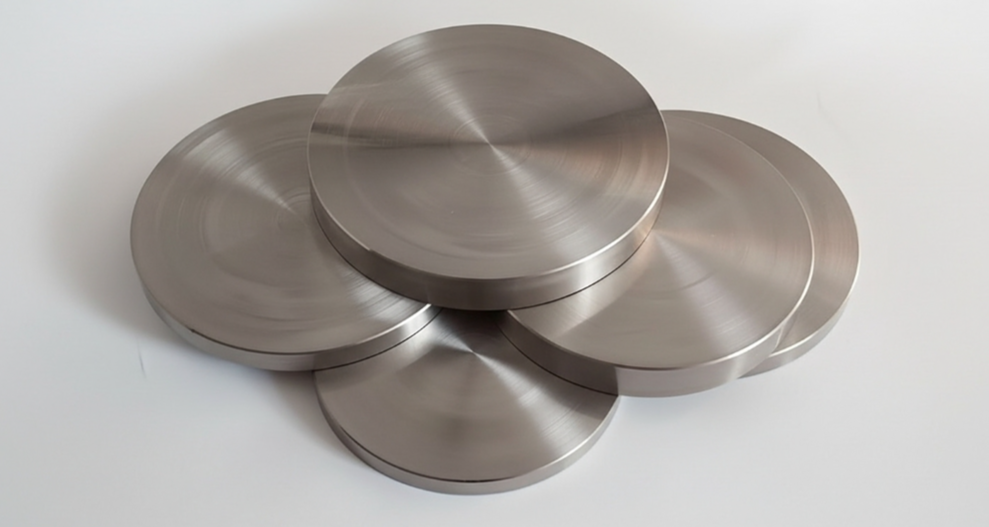
Titanium Planar Targets (Rectangular/Circular)
The Reality: They are the easiest to manufacture and install.
The Trade-off: Magnetron sputtering creates a “race track” erosion pattern, meaning you often throw away 70% of the material.
Best For: R&D labs and small-batch decorative coating.
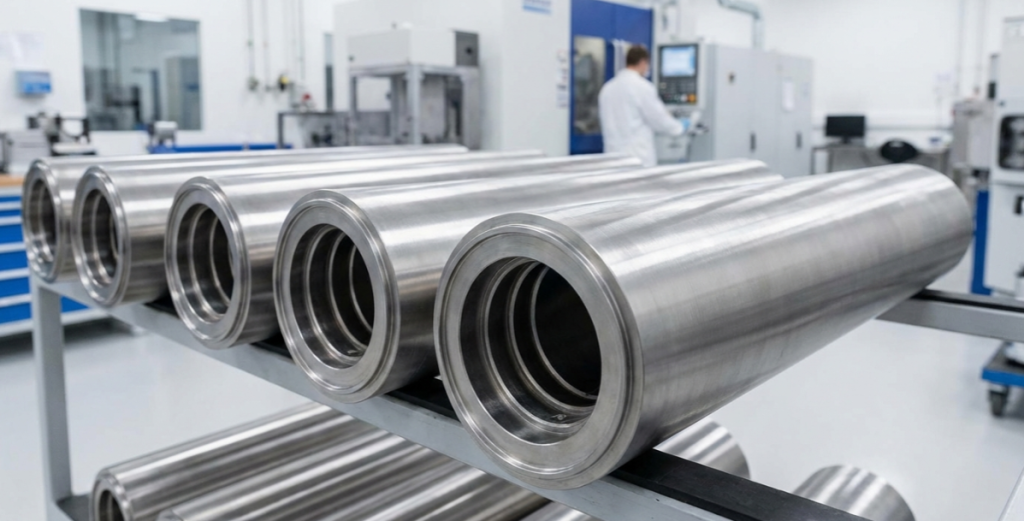
Titanium Rotary Targets (Cylindrical)
The Reality: These targets rotate during sputtering, allowing for utilization rates of 80% or higher.
The Trade-off: Higher initial equipment cost and more complex maintenance.
Best For: Large-area glass coating, solar cells, and high-volume industrial lines.
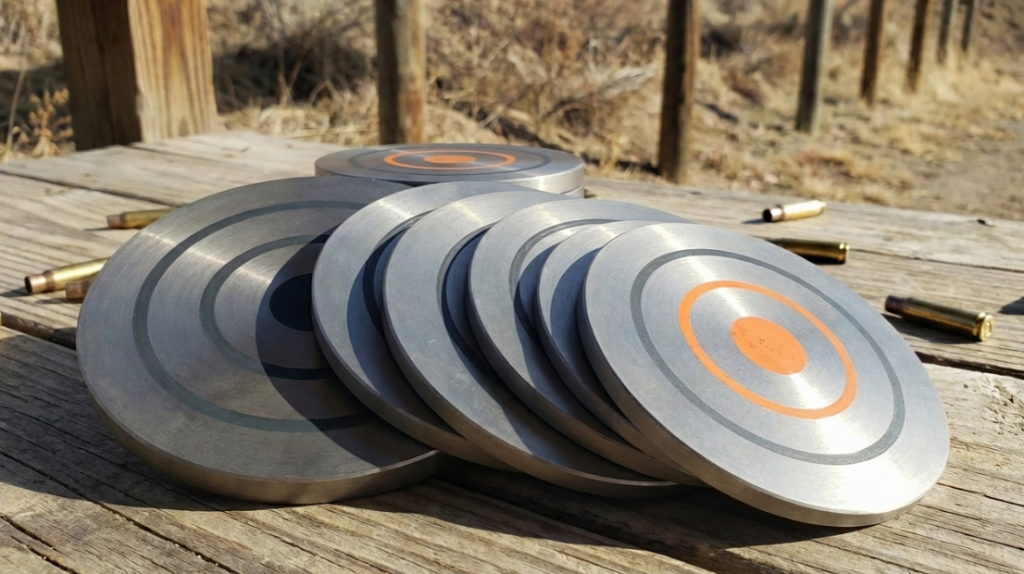
Titanium Disc Targets
The Reality: Engineered specifically for circular cathodes in semiconductor tools.
The Trade-off: Requires precise Indium Bonding to a copper backing plate to prevent cracking under high power.
3. Case Study: Solving Delamination in Hard Coatings
The Problem: A client producing high-end CNC cutting tools struggled with “coating peel-off” during high-temperature operations. They were using a standard TiAl target but couldn’t achieve consistent results.
The Solution: Drawing from our internal data at Tai Times, we optimized their TiAl (Titanium-Aluminum) ratio. Instead of a generic mix, we utilized a TiAl 33/67 at% composition (specifically tailored for high-aluminum AlTiN layers). We also tightened the Oxygen impurity threshold to < 300 ppm.
The Result: The lower internal stress of the resulting film increased tool life by 22%. Expert Insight: In the world of alloys, a 1% shift in atomic ratio is the difference between a tool that lasts a week and one that lasts a month.
4. Quality Control: The "Trust" Factor
To ensure every target meets the E-E-A-T standard, we employ a rigorous verification process:
Chemical Analysis: Using GDMS (Glow Discharge Mass Spectrometry) to detect trace impurities down to the ppb (parts per billion) level.
Internal Integrity: Every target undergoes Ultrasonic Testing (UT) to ensure zero porosity and no internal cracks.
Surface Finish: We maintain a strictly controlled Ra (Roughness average) to minimize “arcing” during the initial burn-in phase.
5. FAQ: Expert Answers to Your PVD Challenges
Q1: What is the standard purity required for semiconductor Ti targets?
A: For logic and memory chips, 5N (99.999%) is the gold standard. For less sensitive barrier layers, 4N5 is often acceptable.
Q2: How does a rotary target improve ROI?
A: Beyond the 80% material utilization, rotary targets allow for higher power density and faster deposition rates, significantly reducing the “Cost per Part.”
Q3: Can you provide backing plates and bonding services?
A: Yes. We specialize in Indium Bonding for planar and disc targets, ensuring maximum thermal conductivity and target stability during high-power sputtering.
Q4: What is the typical grain size of your high-purity Ti targets?
A: Our standard semiconductor-grade Ti targets feature a grain size of $< 100 \mu m$, with options for ultra-fine grain structures upon request.
Q5: How do you prevent “Target Poisoning” in reactive sputtering?
A: By using high-density targets and optimizing the gas flow feedback loop, we help clients maintain a “Metallic Mode” or “Transition Mode” to prevent the formation of non-conductive layers on the target surface.
Selecting the right Titanium Sputtering Target is an engineering decision, not just a procurement one. At titimecn , we combine European manufacturing standards with a decade of localized expertise to provide targets that don’t just “sputter”—they perform.
Would you like me to generate a technical datasheet for a specific TiAl alloy ratio (like 50/50 or 33/67) based on your PVD system’s requirements?