Your Guide to Sputtering Excellence: Selecting the Right Titanium Target
In the world of physical vapor deposition (PVD) and thin-film coating, the quality of your raw materials dictates the success of your final product. A high-quality Titanium Target is one of the most widely used sputtering materials in the industry, highly prized for its exceptional corrosion resistance, biocompatibility, and superior film-forming properties. Whether you are depositing diffusion barriers on silicon wafers or adding a wear-resistant gold-colored coating to a milling tool, selecting the right target is critical.
At Ti Time Company, we leverage our extensive metallurgical expertise to supply high-performance materials, including Ti-6Al-4V and specialized sputtering targets. We offer comprehensive, customized manufacturing to meet the exact specifications of your coating equipment.
II. Classifying the Titanium Target by Purity
When evaluating a Titanium Target, purity is the most critical dividing line. The level of trace impurities (especially oxygen, nitrogen, carbon, and heavy metals) directly influences the electrical and optical properties of the sputtered film.
Commercial Pure (CP Ti, 99.0% – 99.7%): Contains slightly higher levels of oxygen and iron, providing high strength. Ideal for anti-corrosion and decorative hardware coatings, such as watch cases.
High Purity (4N, 99.99%): Features very low impurity levels. A Titanium Target of this grade is the standard for flat panel displays (LCD/OLED) to create reliable lead wires or barrier layers.
Ultra-High Purity (5N-6N, 99.999% – 99.9999%): Manufactured with virtually zero trace elements and strictly controlled radioactive elements (U, Th). These are exclusively used in 12-inch wafer manufacturing for advanced integrated circuits (microchips).
III. Geometry and Customization of a Titanium Target
Not all sputtering chambers are built the same. To maximize material utilization and film uniformity, the physical shape of the target must match your process.
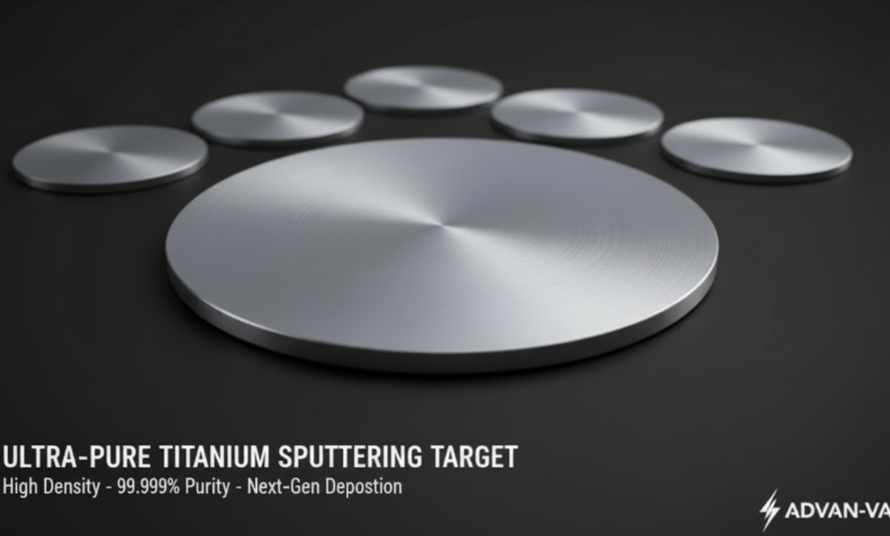
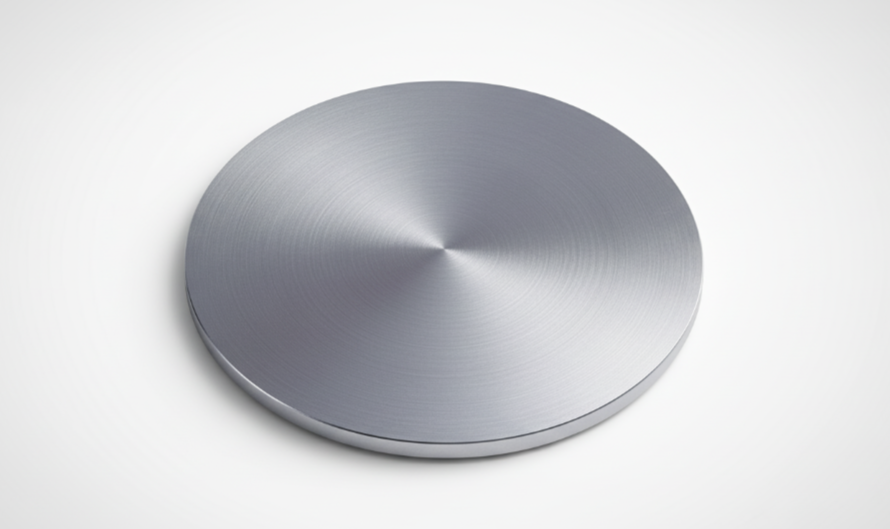
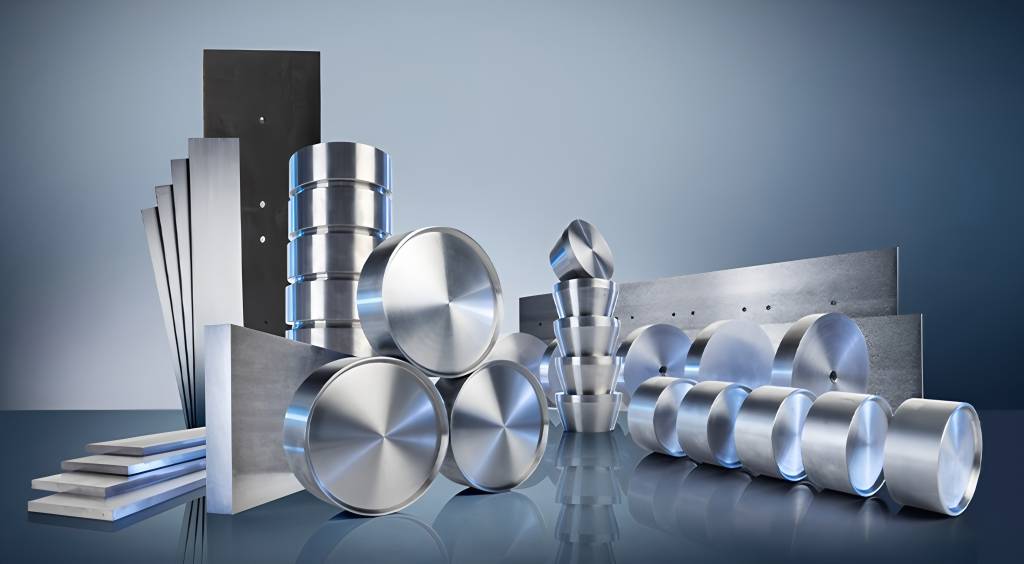
Planar Targets: Available in circular (typically 1 to 12 inches in diameter) or rectangular shapes. These are standard in laboratory R&D and medium-scale PVD batch coaters.
Rotary Tube Targets: Shaped as a cylinder, this Titanium Target rotates during sputtering. This continuous movement prevents localized surface oxidation and drastically increases material utilization (often up to 80%). It is widely used in large-area architectural glass coating, such as Low-E glass.
Custom / Step Targets: For specific semiconductor equipment, Ti Time Company provides customized manufacturing of “stepped” targets—thicker in the center and thinner at the edges—to optimize plasma distribution and sputtering uniformity.
IV. Industrial Applications and Alloy Variations
Beyond pure titanium, modern manufacturing often requires specific performance traits achieved by alloying titanium with other elements.
Semiconductors & Electronics: Pure titanium is used to create diffusion barriers (stopping aluminum or copper from leaching into silicon) and adhesion layers.
Decorative & Tool Coatings: By introducing reactive gases like nitrogen or oxygen during sputtering, a Titanium Target can deposit TiN (gold color, extremely hard) or TiC (black) onto cutting tools, drills, and smartphone casings.
Alloy Target Solutions: We also supply specialized derivative targets through our custom manufacturing capabilities:
Titanium-Aluminum (Ti-Al): The workhorse for hard tool coatings, offering exceptional red-hardness (high-temperature stability) for CNC milling cutters.
Titanium-Tungsten (Ti-W): Highly dense barrier layers used in chip packaging to prevent metal migration.
V. 5 FAQs About Titanium Targets
Q1: Why is “grain size” important when choosing a Titanium Target? A: While purity is vital, the grain size and crystallographic orientation determine how evenly the atoms are ejected during sputtering. A finer, more uniform grain size (typically < 100μm for semiconductors) ensures that the resulting thin film has a highly consistent thickness across the entire substrate.
Q2: Can Ti Time Company provide customized Titanium Target shapes? A: Yes. We specialize in the customized manufacturing of various products. Whether you need a standard 4-inch planar target for research or a large rotary tube for industrial glass coating, we manufacture to your specific equipment drawings.
Q3: What purity grade is required for microchip manufacturing? A: Semiconductor fabrication requires Ultra-High Purity targets, typically 5N (99.999%) or 6N (99.9999%). This ensures that no rogue metallic impurities or radioactive isotopes disrupt the delicate electrical pathways on the silicon wafer.
Q4: How do I achieve a gold-colored coating using a Titanium Target? A: You can achieve a hard, gold-colored finish through “reactive sputtering.” By sputtering a pure Titanium Target in a vacuum chamber filled with a controlled amount of Nitrogen gas, a Titanium Nitride (TiN) film is deposited onto the substrate.
Q5: What is the advantage of a rotary tube target over a planar target? A: Rotary tube targets offer a significantly higher material utilization rate. Because the target rotates continuously during the PVD process, the “racetrack” erosion is spread over the entire circumference, meaning you waste far less titanium compared to a stationary flat target.
VI. Your Trusted Partner for High-Quality Titanium and Advanced Materials
Ti Time is a leading manufacturer and supplier specializing in titanium, tungsten, molybdenum, tantalum, niobium, zirconium, anodes, and composite materials. With decades of experience, we are known for delivering high-quality products and exceptional customer service.
Our offerings include plates, rods, tubes, foils, wires, screws, capillary tubes, targets, custom parts, forgings, and alloys. Operating under the ISO9001 quality system, our products meet ASTM, ASME, AMS, JIS, DIN, and MIL standards, and are exported to countries such as the US, Japan, Germany, and South Korea. Let Ti Time Company handle the customized production of your next Titanium Target to meet all your demanding requirements.