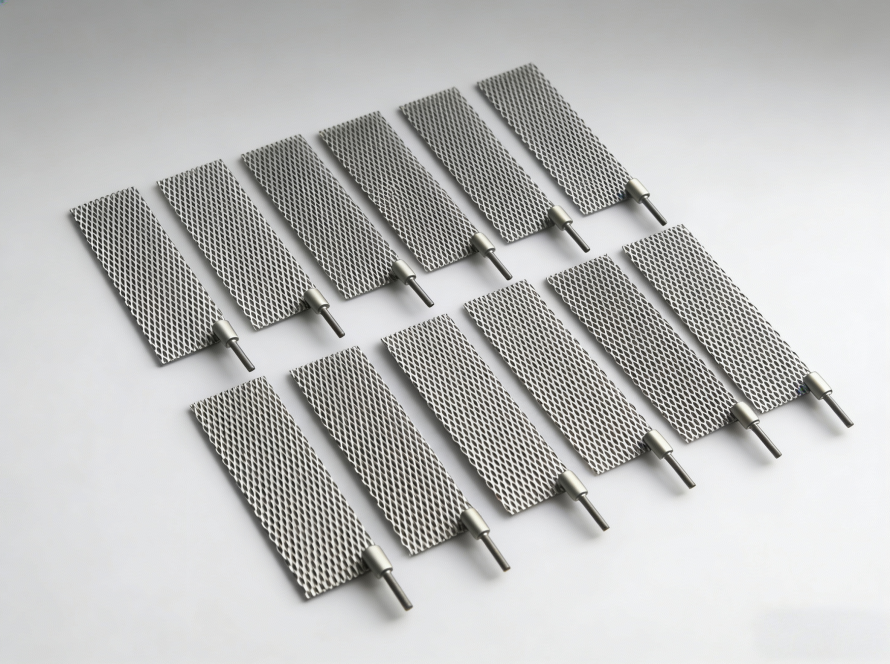
A Titanium Bipolar Plate is a critical component in modern fuel cells and electrolyzer stacks, responsible for current conduction, gas separation, and flow field management. As industries push toward clean energy and hydrogen technologies, titanium-based solutions are gaining momentum for their exceptional durability and corrosion resistance.
What Is a Titanium Bipolar Plate?
A Titanium Bipolar Plate sits between adjacent cells in a PEM (Proton Exchange Membrane) fuel cell stack. Its core functions include:
- Conducting electrons from one cell to the next
- Separating reactant gases (hydrogen and oxygen)
- Distributing gases evenly via engineered flow channels
- Supporting thermal and water management
Compared to traditional materials, titanium plates offer longer service life in highly acidic and humid environments.
Why Choose Titanium for Bipolar Plates?
Titanium stands out due to its unique material properties:
- Outstanding corrosion resistance
Ideal for harsh electrochemical environments where stainless steel may degrade - High strength-to-weight ratio
Enables lighter and more compact fuel cell stacks - Low density (~4.5 g/cm³)
Reduces overall system weight - Excellent mechanical durability
Maintains structural integrity under pressure and temperature cycling
In practical applications, surface coatings (e.g., gold, platinum, carbon-based coatings) are often applied to reduce interfacial contact resistance (ICR) and enhance conductivity.
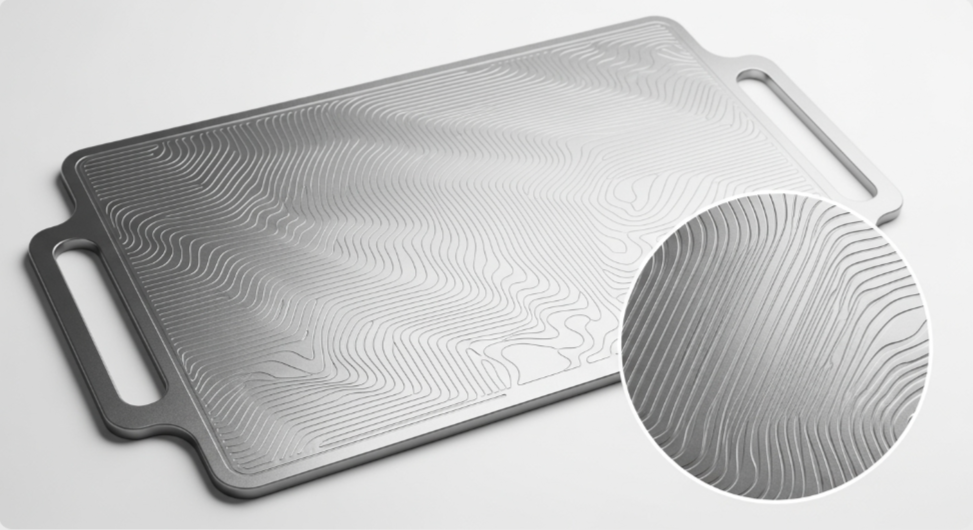
Titanium Bipolar Plate Manufacturing & Customization
At Ti Time Company, we specialize in custom Titanium Bipolar Plate manufacturing tailored to your application.
Our capabilities include:
- Precision stamping & forming for flow field design
- CNC machining for tight tolerances
- Laser welding & bonding for plate assemblies
- Advanced coating technologies:
- PVD coatings (TiN, CrN)
- Precious metal coatings (Au, Pt)
- Carbon-based conductive layers
Customization options:
- Plate thickness and geometry
- Flow channel patterns (serpentine, parallel, interdigitated)
- Surface roughness and coating type
- Batch or mass production
Result: Fully optimized bipolar plates that meet performance, durability, and cost targets.
Applications of Titanium Bipolar Plates
Titanium bipolar plates are widely used in:
- PEM fuel cells (automotive, stationary power)
- Hydrogen electrolyzers
- Portable energy systems
- Aerospace and defense energy modules
Their chemical stability and long lifecycle make them ideal for mission-critical environments.
Why Choose Ti Time Company as Your Supplier?
As a trusted Titanium Bipolar Plate supplier, Ti Time Company brings:
- Decades of industry experience in advanced materials
- ISO9001-certified manufacturing
- Compliance with ASTM, ASME, AMS, JIS, DIN, MIL standards
- Export expertise across the US, Japan, Germany, and South Korea
- Strong R&D and engineering support for custom solutions
We don’t just supply products—we provide engineered solutions tailored to your fuel cell system.
FAQs About Titanium Bipolar Plate
1. What is the main advantage of a Titanium Bipolar Plate?
The biggest advantage is corrosion resistance, which ensures long-term durability in aggressive fuel cell environments.
2. Does titanium have good electrical conductivity?
Titanium itself has moderate conductivity, so coatings are typically applied to reduce contact resistance and improve performance.
3. How does titanium compare to graphite or stainless steel?
- Titanium: Best durability + lightweight
- Graphite: Excellent conductivity but brittle
- Stainless steel: Lower cost but less corrosion-resistant
4. Can Titanium Bipolar Plates be customized?
Yes. Manufacturers like Ti Time Company offer fully customized designs, including geometry, coatings, and production scale.
5. What coatings are commonly used?
Common coatings include:
- Gold (Au) for ultra-low resistance
- Platinum (Pt) for high-performance systems
- Carbon-based coatings for cost-effective conductivity
The Titanium Bipolar Plate is a key enabler of next-generation clean energy systems, offering unmatched durability, lightweight performance, and adaptability. With the right manufacturing partner, these components can be fully optimized for efficiency and longevity.